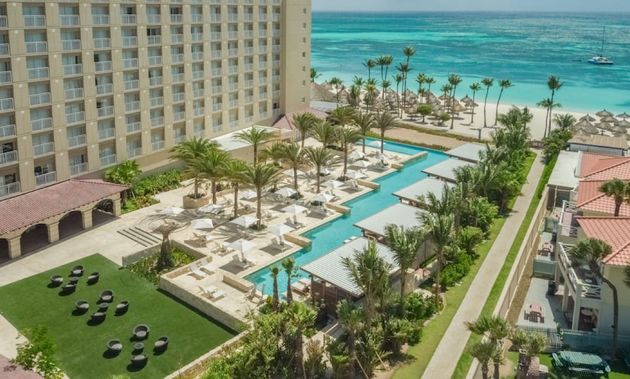
Escape to a beachfront resort in Palm Beach, Aruba, where a wide stretch of sugary white beaches and a heavenly blue ocean captivate your senses from the moment you arrive
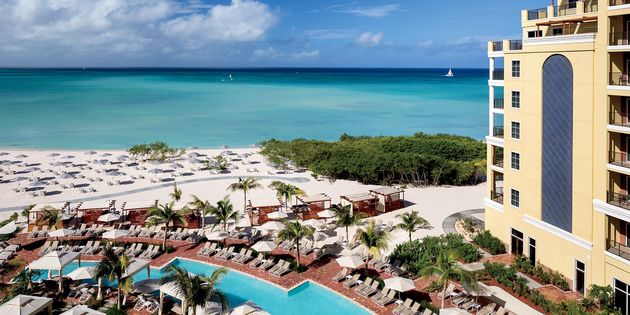
With the powdery sands of Aruba’s Palm Beach right at your finger tips, you will find The Ritz-Carlton, Aruba.
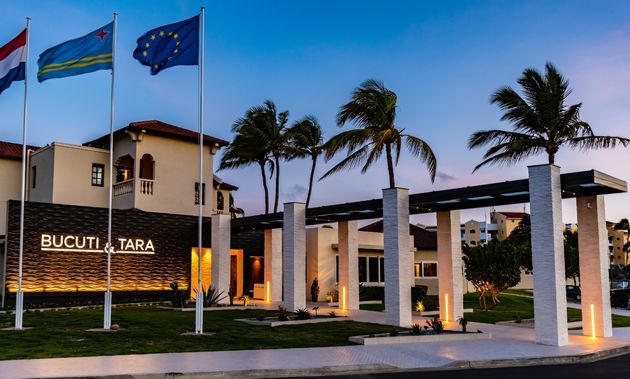
Bucuti Beach Resort, featuring the Tara beach Suites and Spa is charming resort that blends exceptional personal service, European charm, and lush landscaping for ultimate tropical escape...
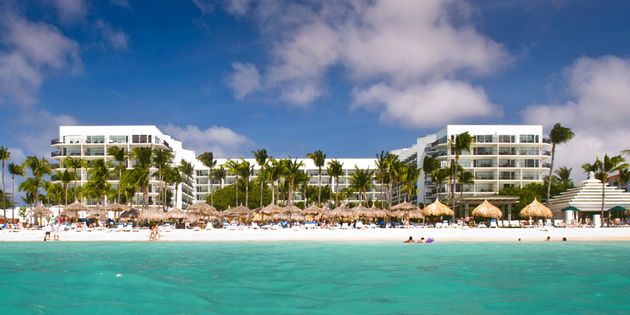
Rising from the shores of Palm Beach, the Aruba Marriott Resort & Stellaris Casino promises a sun-soaked Caribbean paradise...
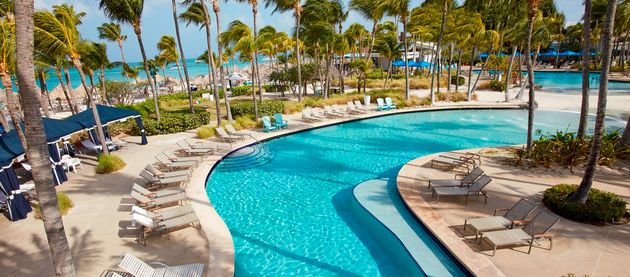
Sun, a breeze, white sands, lush palm trees - welcome to your tropical getaway at Hilton Aruba Caribbean Resort & Casino.
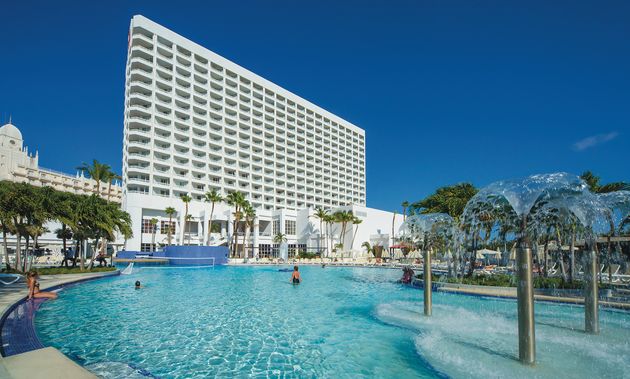
Offering the best of everything, the Hotel Riu Palace Antillas features stunning accommodations and every imaginable amenity...
Showing 1 - 6 of 6
The Unexpected Beauty of Aruba
Aruba has a way of surprising even seasoned travelers. At first glance, it appears to be the classic Caribbean escape, with soft sand and crystal-clear water. But stay a little longer, and the island shows something else entirely. On the northern side, the Ayo and Casibari rock formations rise above the landscape, shaped by wind over the years. Close by, the Natural Pool at Conchi sits tucked into volcanic stone, filled by waves that slip through the rock.Most travelers settle along the western coast, around Palm Beach and Eagle Beach, where many of Aruba's best luxury resorts are located, and daily life follows a rhythm that ebbs and flows with the ocean. Local dishes, such as keshi yena — cheese filled with warmly spiced meat — are popular menu items that offer a sensory glimpse of the island. As the day winds down, boats drift out of Oranjestad, a popular evening ritual for the best sunset vistas.
Drive inland, and Aruba shifts again. Arikok National Park, sitting within about 30 minutes from the coast, covers much of the island and offers a more rugged, unassuming experience. Here, the terrain changes quickly, with cacti, rocks, and uneven tracks. Local guides offer exciting, insightful excursions that help you learn more about and explore the landscape with ease.
Getting here is relatively easy, with direct flights from major U.S. cities and the added convenience of U.S. pre-clearance before departure. If you arrive toward the end of winter, you’ll catch the last stretch of Carnival, when the island fills with music and color.
The mix of polished island luxury along the coast with something more raw is what tends to stay with people long after they leave.
